Future of SEO in 2026: 7 Critical Trends That Will Define Search Rankings
AI Overviews, AEO, GEO, E-E-A-T, Core Web Vitals — SEO in 2026 looks radically different. Here are the 7 trends shaping how search works and what you must do to rank.

Rikesh Panchal
Google Ads Certified Trainer
Ahmedabad, Gujarat
Part of our complete guide: How to Become an SEO Expert in 2026: A 7-Step Practical Roadmap
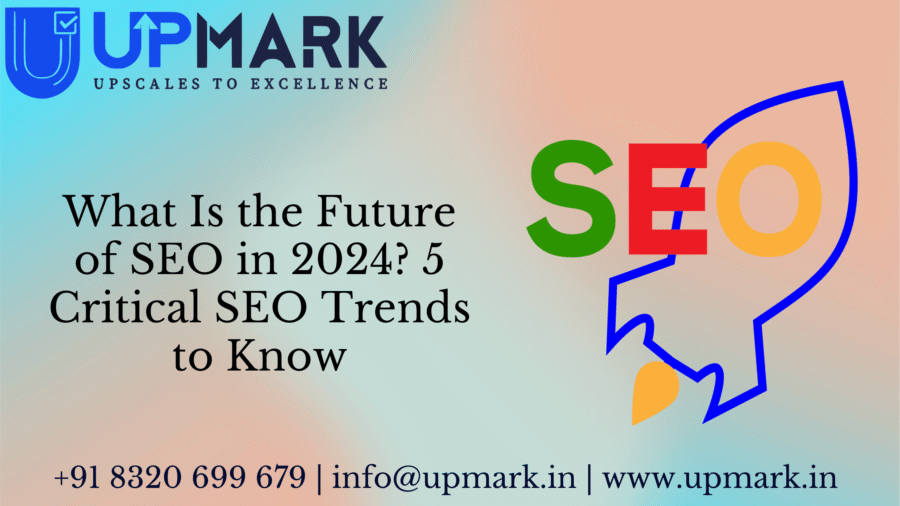
Table of Contents
- 1Trend 1: AI Overviews Are Reshaping the Search Results Page
- What This Means for Your Traffic
- How to Rank in AI Overviews
- 2Trend 2: GEO — Generative Engine Optimisation Is the New Frontier
- How GEO Works
- GEO Tactics for 2026
- 3Trend 3: E-E-A-T Is Now Google's Most Critical Quality Signal
- What E-E-A-T Means in Practice
- How to Build E-E-A-T
- 4Trend 4: Core Web Vitals and Page Experience Are Non-Negotiable
- The Three Core Web Vitals
- Mobile-First Is No Longer Optional
- 5Trend 5: Voice Search and Multimodal Search
- Optimising for Conversational Queries
- Google Lens and Visual Search
- 6Trend 6: Video SEO Is Now Essential
- 7Trend 7: Local SEO Is Merging With AI Search
- Local SEO Priorities for 2026
- 8What These Trends Mean for Your SEO Strategy
- 9Frequently Asked Questions
- 10The Bottom Line: SEO in 2026 Rewards Quality More Than Ever
⚡ Quick Answer
The future of SEO in 2026: Search is shifting from 10 blue links to AI-generated answers (Google AI Overviews), conversational search (AEO), and multi-platform discovery (GEO — Generative Engine Optimisation). The 7 trends reshaping SEO are: AI search integration, AEO/GEO optimisation, E-E-A-T as a trust signal, Core Web Vitals, voice and multimodal search, video SEO, and local AI search. SEO is not dying — it is evolving, and the fundamentals of great content and technical excellence matter more than ever.
If you've been hearing that "SEO is dead," you're hearing it wrong. SEO isn't dying — it's going through the most significant transformation since Google launched. The websites that understand this transformation and adapt to it will capture enormous amounts of organic traffic. Those that don't will find themselves invisible.
This guide breaks down the 7 trends that define where SEO is going in 2026 and what specific actions you need to take to stay ahead of each one.

Trend 1: AI Overviews Are Reshaping the Search Results Page
Google's AI Overviews (formerly Search Generative Experience or SGE) now appear in approximately 43% of search queries in India. Instead of just showing 10 blue links, Google generates a summarised answer at the top of the results page — pulling from multiple sources.
What This Means for Your Traffic
The immediate effect: clicks on traditional organic results dropped 10–15% for queries that trigger AI Overviews. The longer-term effect: websites that are cited in AI Overviews gain significant authority signals and often see overall traffic increase even with fewer direct clicks from that specific query.
How to Rank in AI Overviews
AI Overviews pull content from sources that are:
- Clearly structured with H1, H2, H3 hierarchy and direct answers
- Authoritative — cited by other trusted sources, with strong E-E-A-T signals
- Comprehensive — cover the topic more completely than competing pages
- Up to date — recently published or updated content is preferred
The single most important tactic: answer-first content structure. Put the direct, complete answer to the main question at the top of the page — within the first 200 words. This matches how AI systems extract information for their summaries.
💡 AEO vs SEO: What's the Difference?
SEO (Search Engine Optimisation) optimises for ranking in traditional search results. AEO (Answer Engine Optimisation) optimises to be the source that AI systems — Google AI Overviews, ChatGPT, Perplexity — pull answers from. In 2026, effective search strategy requires both. The good news: great SEO content is also great AEO content, as long as it's structured with clear answers first.
Trend 2: GEO — Generative Engine Optimisation Is the New Frontier
GEO (Generative Engine Optimisation) is the practice of optimising your content to be cited and recommended by AI chatbots — ChatGPT, Gemini, Claude, Perplexity, and others. These AI tools are now being used by millions of people as search engines, and the brands that appear in their answers get significant visibility without paying for ads.
How GEO Works
When someone asks ChatGPT "what's the best digital marketing course in Ahmedabad?" — the AI pulls from content it was trained on and from real-time web search. Websites that:
- Are frequently cited by other authoritative sources
- Have clear, factual, structured content
- Maintain consistent brand presence across the web
- Have strong social proof (reviews, mentions, backlinks)
...are more likely to be recommended by AI tools.
GEO Tactics for 2026
- Wikipedia-style factual content: Write content that reads like an authoritative reference, not a sales page
- Structured data (schema markup): Use FAQ, HowTo, and Article schema to make your content machine-readable
- Brand mentions: Get your brand mentioned on reputable news sites, industry blogs, and review platforms
- Consistent NAP: Keep your business name, address, and phone consistent across every online listing
- Review volume: High-quality Google and industry reviews signal trust to both search engines and AI systems
Trend 3: E-E-A-T Is Now Google's Most Critical Quality Signal
Google's E-E-A-T framework — Experience, Expertise, Authoritativeness, Trustworthiness — has become the central lens through which Google evaluates content quality. In 2026, this is not a nice-to-have: it's the filter that determines whether your content gets shown at all.

What E-E-A-T Means in Practice
| Signal | What It Requires |
|---|---|
| Experience | First-hand experience with the topic — "I've done this, here's what happened" |
| Expertise | Demonstrable knowledge depth — credentials, certifications, years of practice |
| Authoritativeness | Recognition from others in your field — citations, mentions, backlinks from authoritative sources |
| Trustworthiness | Transparent author information, accurate content, secure site, honest reviews |
How to Build E-E-A-T
For content:
- Every article should have a named author with a bio, credentials, and LinkedIn profile link
- Include first-person experience: "When we ran this campaign, here's what we found..."
- Cite data from reputable sources — Google, Statista, industry reports
- Update content regularly and show the "last updated" date prominently
For your website:
- Publish detailed About Us and team pages
- Show real business address, phone number, and business registration
- Display genuine customer reviews (Google, Trustpilot, etc.)
- Get mentioned and linked to by industry publications and news sites
For YMYL topics (health, finance, legal, education):
- E-E-A-T requirements are significantly stricter — Google explicitly states these pages face heightened scrutiny
- Every claim should be supported by verifiable sources
- Author credentials must be directly relevant to the topic
⚠️ E-E-A-T Cannot Be Faked
You cannot trick E-E-A-T with technical optimisation. It requires genuine expertise, real-world experience, and actual authority signals from external sources. This is why Upmark's blog content is written by Rikesh Panchal — a digital marketing practitioner with 10+ years of experience training professionals — not by anonymous writers or AI without human expertise review.
Trend 4: Core Web Vitals and Page Experience Are Non-Negotiable
Google's Page Experience signals — led by Core Web Vitals — are a confirmed ranking factor in 2026. Technical excellence is now a baseline requirement to rank, not a competitive advantage.
The Three Core Web Vitals
How fast the largest element (image or text block) on your page loads. Compress images and use a CDN.
How quickly your page responds to user interaction (clicking, tapping). Reduce JavaScript execution time.
Whether elements move around as the page loads (annoying layout jumps). Set explicit dimensions on images.
Google's official tool to measure all Core Web Vitals for any page. Run it weekly on your key pages.
Shows Core Web Vitals performance across your entire site — segmented by mobile and desktop.
Crawl your entire site to find pages with poor performance, broken elements, and technical issues at scale.
Mobile-First Is No Longer Optional
Google's mobile-first indexing means your mobile site is now the primary version used for ranking. If your mobile experience is poor — slow loading, tiny text, broken elements on small screens — your rankings will suffer even if your desktop site is excellent.
Trend 5: Voice Search and Multimodal Search
Voice search continues to grow, particularly in India where regional language voice queries have exploded. But the more significant trend in 2026 is multimodal search — users combining text, voice, images, and even video in their search queries.
Optimising for Conversational Queries
Voice search queries are fundamentally different from typed queries:
- Typed: "best SEO course Ahmedabad"
- Voice: "What's the best place to learn SEO in Ahmedabad with job placement?"
To rank for voice queries:
- Target long-tail, conversational keywords
- Create FAQ pages that directly answer natural language questions
- Use structured data (FAQ schema) to make answers machine-readable
- Focus on local SEO — most voice searches have local intent
Google Lens and Visual Search
Google Lens processes 12 billion visual searches monthly. Images that are:
- Named descriptively (not "IMG_1234.jpg")
- Have accurate alt text describing the image content
- Are high quality and load quickly
- Are embedded in relevant, authoritative content
...have significantly higher visibility in visual search results.
Trend 6: Video SEO Is Now Essential
YouTube is the world's second-largest search engine. In India, it's often the first search engine for how-to queries, especially for younger audiences. Video content that ranks well on YouTube also increasingly appears in Google search results as rich results.
💡 Video SEO Quick Wins
Add transcripts to every YouTube video (Google indexes the spoken content). Write detailed video descriptions (500+ words) with your target keywords naturally included. Use timestamps and chapters — these appear in Google search results and significantly increase click-through rates. Title your videos with actual search queries, not clever headlines.
Video content types that rank well:
- Tutorial and how-to videos (high search intent)
- Product reviews and comparisons (commercial intent)
- Expert interviews and case studies (authority building)
- Local business explainer videos (local SEO)
Trend 7: Local SEO Is Merging With AI Search
For any business with a physical location or serving a specific geography, local SEO in 2026 is being transformed by AI. Google Maps results now appear in AI Overviews, and Google's AI tools use your Google Business Profile data to answer queries like "best digital marketing institute near me."
Local SEO Priorities for 2026
What These Trends Mean for Your SEO Strategy
Here's how to prioritise your SEO work given these 7 trends:
| Priority | Action | Impact | Timeline |
|---|---|---|---|
| 1 | Implement answer-first content structure | AI Overviews + featured snippets | Immediate |
| 2 | Add E-E-A-T signals to all content | Core ranking factor | 1–3 months |
| 3 | Fix Core Web Vitals | Technical ranking factor | 1–2 months |
| 4 | Set up FAQ schema markup | Voice search + AEO | 1 week |
| 5 | Optimise Google Business Profile | Local AI search | 1 week |
| 6 | Start video content strategy | YouTube + Google video rich results | 2–4 months |
| 7 | Build brand citations and mentions | GEO / AI chatbot visibility | 3–6 months |
Learn SEO That Works in 2026 — Not 2020
Upmark's AI SEO Course is built for the current search landscape — AI Overviews, AEO, E-E-A-T, and Core Web Vitals all covered with hands-on practice. Classroom in Ahmedabad + Online Live.
View AI SEO Course Details →
Frequently Asked Questions
Is SEO still relevant in 2026 with AI taking over search?
Yes — more relevant than ever. AI Overviews (Google's AI search feature) still pull content from websites that rank well. The websites that appear in AI summaries are those with strong traditional SEO signals — good content, strong E-E-A-T, technical excellence, and authoritative backlinks. If anything, AI search increases the gap between well-optimised and poorly-optimised websites, because AI systems select only the most trustworthy, structured sources.
What is AEO and how is it different from SEO?
AEO (Answer Engine Optimisation) is the practice of structuring content to be cited as a direct answer by AI search tools — Google AI Overviews, ChatGPT, Perplexity, and others. Traditional SEO focuses on ranking in the 10 blue links. AEO focuses on being the source AI systems pull their answers from. The key difference: AEO requires answer-first content structure, clear schema markup, and strong E-E-A-T signals. The good news is that great SEO content is also great AEO content.
What does GEO mean in SEO?
GEO stands for Generative Engine Optimisation — the practice of optimising your brand and content to appear in AI-generated answers from systems like ChatGPT, Gemini, Claude, and Perplexity. As more people use AI chatbots as search engines, brands that are frequently cited by authoritative sources, have consistent online presence, and produce factually reliable content are more likely to be recommended. GEO is now a distinct discipline alongside traditional SEO and AEO.
Will AI replace SEO professionals?
No — AI will replace low-skill, repetitive SEO tasks (basic keyword lists, generic meta descriptions, templated content) but will increase demand for strategic SEO professionals. The skills in highest demand in 2026 are: technical SEO auditing, content strategy, E-E-A-T building, link acquisition, and the ability to optimise for AI search systems. These require human judgment, creative thinking, and real-world expertise — things AI tools cannot replace.
What are the most important SEO ranking factors in 2026?
Based on current data and Google's documentation, the most impactful ranking factors in 2026 are: (1) E-E-A-T signals across content and website, (2) content quality and topical depth, (3) Core Web Vitals technical performance, (4) authoritative backlinks from relevant sources, (5) user engagement signals (time on page, click-through rate), (6) mobile-first experience, and (7) structured data / schema markup. Keywords remain important but are now a foundation rather than a standalone strategy.
How do I optimise for Google AI Overviews?
To appear in Google AI Overviews: structure your content with a direct answer in the first 200 words, use clear H2/H3 headings that match search queries, add FAQ schema markup, build E-E-A-T signals (author credentials, external citations), keep content accurate and up-to-date, and ensure your page has no technical issues. AI Overviews tend to favour content from websites with strong domain authority and recent publication dates.
How long does SEO take to show results in 2026?
The timeline hasn't changed dramatically: most websites see measurable organic traffic growth in 3–6 months with consistent effort. New websites or new domains typically take 6–12 months to gain traction. However, appearing in AI Overviews and featured snippets can happen faster — sometimes within weeks — if your content is well-structured and your page has some existing authority. Local SEO often shows results fastest, sometimes within 4–8 weeks of optimising your Google Business Profile.
What is the future of keyword research in 2026?
Keyword research is evolving from "find the exact phrase and use it X times" to "understand the topic and all related questions comprehensively." In 2026, effective keyword research identifies topic clusters (groups of related queries around a theme) rather than individual target keywords. Tools like Ahrefs and Semrush now show "Topic Explorer" and "Content Gap" features that reflect this shift. Voice search queries, question-based keywords, and conversational long-tails are growing faster than traditional head terms.
Should I invest in SEO or Google Ads in 2026?
Ideally both, but for different goals. SEO builds long-term organic traffic that doesn't cost per click — it compounds over time. Google Ads delivers immediate, targeted visibility at a cost. The best strategy: use Google Ads to capture demand and test messaging while your SEO builds momentum, then gradually reduce ad spend as organic traffic grows. Most growing businesses in India find the right balance is roughly 60% of marketing budget on organic (SEO + content) and 40% on paid, shifting over time toward 70/30 organic/paid as SEO matures.
The Bottom Line: SEO in 2026 Rewards Quality More Than Ever
The future of SEO is not about tricks, shortcuts, or gaming an algorithm. In 2026, the search engines — and AI systems — are better than ever at identifying content that genuinely helps people. The websites that will dominate the next 5 years are those that invest in:
- Real expertise expressed through authentic, structured content
- Technical excellence that makes pages fast and accessible
- Brand authority built through consistent presence across multiple platforms
- AI-friendly content structure that makes answers easy to extract
If you want to build these skills professionally — whether for your own business or as a career in SEO — the AI SEO Course at Upmark is built specifically for the 2026 search landscape. You'll learn traditional SEO fundamentals alongside AI tools integration, AEO optimisation, and technical SEO — all with real project work and placement support.
Explore the complete AI Digital Marketing Course if you want SEO as part of a full digital marketing skill set, or check out our student placements to see where Upmark graduates are working today.
Master SEO for 2026 and Beyond
Upmark's AI SEO Course covers AI Overviews, AEO, E-E-A-T, Core Web Vitals, technical SEO, and AI tools — all with live classroom sessions in Ahmedabad and real client projects. Placement support included.
Book Your Free Demo Class →Written By
Rikesh Panchal
Founder & Lead Trainer, Upmark Digital Marketing Institute
Rikesh Panchal founded Upmark in 2018 after 6+ years running live digital marketing campaigns for consumer, fintech and D2C brands. He has personally managed ₹50 Cr+ in ad spend and still runs active client campaigns today alongside teaching. Every article and course module he writes is shaped by one question: will this actually get a student hired?
- Google Ads Certified Trainer
- Meta Blueprint Certified
- HubSpot Academy Partner
- Google Analytics 4 Specialist
Found this useful? Share it
Free Demo Class
Ready to turn this knowledge into a career?
Live projects, AI tools & placement support from Ahmedabad's top digital marketing institute.