The Importance of SEO in Digital Marketing: Why It's the Foundation of Online Growth
SEO is the highest-ROI channel in digital marketing — delivering compounding organic traffic without ongoing ad spend. Here's why every business needs it in 2026.

Rikesh Panchal
Google Ads Certified Trainer
Ahmedabad, Gujarat
Part of our complete guide: How to Become an SEO Expert in 2026: A 7-Step Practical Roadmap
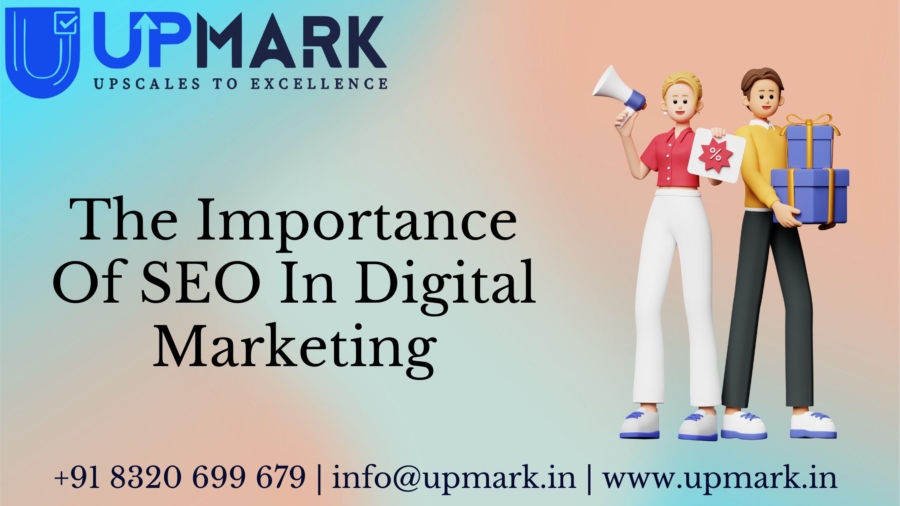
Table of Contents
- 1SEO in the Digital Marketing Ecosystem
- 28 Reasons SEO Is Critical for Digital Marketing Success
- 1. It Delivers the Most Traffic
- 2. It Builds Credibility and Trust
- 3. It Delivers Qualified, Intent-Driven Traffic
- 4. It Offers the Best Long-Term ROI
- 5. It Enhances Every Other Marketing Channel
- 6. It Gives You Competitive Intelligence
- 7. It Supports Every Stage of the Customer Journey
- 8. It Provides Measurable, Attributable Results
- 3SEO vs. Paid Advertising: The Right Perspective
- 4SEO for Different Types of Indian Businesses
- 5The Cost of Ignoring SEO
⚡ Quick Answer
Why is SEO important in digital marketing? SEO drives 53% of all website traffic globally — more than paid search, social media, and direct traffic combined. Unlike paid ads that stop the moment you stop paying, SEO delivers compounding returns over time. For Indian businesses, it's the highest-ROI digital marketing channel, with cost-per-acquisition 5–10x lower than Google Ads for established organic presence.
India surpassed 900 million active internet users in 2025. Every one of them uses a search engine to discover products, services, and information. If your business doesn't appear in those search results, a competitor does — and they get the customer.
For businesses in Ahmedabad, Surat, Mumbai, or anywhere in India, SEO is not a "nice to have" part of digital marketing. It is the foundation everything else is built on.

SEO in the Digital Marketing Ecosystem
Digital marketing consists of many channels — paid search (Google Ads), social media marketing, email marketing, content marketing, influencer marketing, and SEO. Each has its role, but SEO occupies a unique position.
Every other digital marketing channel creates temporary attention. An ad runs while you pay for it. A social post gets seen for 48 hours. An email is read once. SEO creates permanent digital real estate — a page that ranks on Google can send traffic every day for years.
More importantly, SEO underlies the success of every other channel. A faster, better-structured website performs better in paid ads. SEO keyword research informs social content strategy. Blog content built for SEO generates email subscribers. SEO is the tide that raises all boats.
💡 The Compounding Effect of SEO
A blog post published today may rank in the top 3 for its keyword within 6 months. That same post, with minor updates, can keep sending traffic for 3–5+ years. Paid ads stop delivering the moment you pause your budget. SEO assets appreciate over time.
8 Reasons SEO Is Critical for Digital Marketing Success
1. It Delivers the Most Traffic
Organic search generates 53% of all web traffic globally, outperforming paid search (15%), social media (5%), and direct traffic combined. Google processes over 8.5 billion searches per day, and the top 3 organic results capture 54% of all clicks for any given query.
In India specifically, Google's market share exceeds 98%. Appearing at the top of Google search results is equivalent to having your shop on the most visited street in every Indian city simultaneously.
2. It Builds Credibility and Trust
Users inherently trust organic search results more than paid advertisements. When your website appears at the top of Google without the "Sponsored" label, users perceive your brand as an authority. This trust translates directly into higher conversion rates.
A study by Edelman found that 81% of Indian consumers need to trust a brand before making a purchase decision. High Google rankings are one of the strongest trust signals available to businesses today.
3. It Delivers Qualified, Intent-Driven Traffic
The traffic SEO delivers is fundamentally different from social media or display advertising. A person searching "digital marketing course Ahmedabad fees" is not casually browsing — they are actively researching a purchase. They have identified a need and are evaluating options.
This intent-driven traffic converts at 14.6% compared to 1.7% for outbound marketing methods like cold calling or display ads. SEO puts your brand in front of people at the exact moment they're ready to engage.
4. It Offers the Best Long-Term ROI
Paid advertising has an unavoidable economics problem: CPCs (cost per click) increase as more competitors enter the market. In competitive industries, Google Ads CPCs in India have risen 30–50% over the past three years.
SEO's ROI improves over time. The content and technical investments made in year one continue delivering traffic in year three — without additional per-click costs. The mathematical advantage of SEO over paid ads becomes overwhelming at 18–24+ months of consistent execution.
5. It Enhances Every Other Marketing Channel
SEO + Content Marketing: Keyword research reveals exactly what your audience wants to learn. Blog posts optimised for SEO build email lists, social followers, and brand authority simultaneously.
SEO + Paid Ads: Higher quality scores from well-optimised landing pages reduce Google Ads CPCs. Organic traffic data reveals which pages and messages convert best, improving ad targeting.
SEO + Social Media: Content that ranks well on Google is also your best social media material — it's proven to resonate with your target audience. Social shares and traffic also contribute to SEO authority signals.
SEO + Email Marketing: Blog subscribers discovered through organic search have higher engagement rates than contacts from paid acquisition. They found you because they were specifically searching for what you offer.

6. It Gives You Competitive Intelligence
SEO tools reveal your competitors' strategies in unprecedented detail. You can see exactly which keywords they rank for, which pages send them the most traffic, and which websites link to them.
This intelligence is invaluable for the entire marketing strategy — not just SEO. Understanding competitor content gaps, weak ranking areas, and link-building targets informs product positioning, content strategy, and partnership opportunities.
7. It Supports Every Stage of the Customer Journey
Different stages of the buyer journey require different content:
| Journey Stage | Intent | Content Type | Example Keyword |
|---|---|---|---|
| Awareness | Learning | Blog posts, guides | "what is digital marketing" |
| Consideration | Comparing | Comparison articles, case studies | "best digital marketing course in Ahmedabad" |
| Decision | Buying | Landing pages, testimonials | "Upmark digital marketing course fees" |
| Retention | Using | Tutorials, help content | "how to use Google Analytics" |
SEO allows you to create content for every stage and ensure customers find you regardless of where they are in their journey.
8. It Provides Measurable, Attributable Results
Unlike traditional advertising (TV, print, outdoor), every aspect of SEO is measurable. Google Search Console shows exactly which keywords are sending traffic. Google Analytics 4 attributes conversions to specific organic search sessions. Rank tracking tools monitor your position for target keywords daily.
This measurability makes SEO uniquely accountable — you can directly connect SEO investments to revenue, leads, and business growth.
Master SEO as Part of a Complete Digital Marketing Strategy
Upmark's AI Digital Marketing Course covers SEO alongside Google Ads, social media, and content strategy — so you understand how each channel amplifies the others. 6-month comprehensive programme with placement support.
Explore AI Digital Marketing Course →SEO vs. Paid Advertising: The Right Perspective
Many businesses treat SEO and paid ads as either/or choices. The most successful digital marketers use them as complements.
- Immediate traffic from day one
- Precise targeting and control
- Easy to scale quickly
- Stops when budget runs out
- CPC increasing every year
- Low trust vs organic results
- No compounding returns
- Traffic continues without ongoing spend
- Higher trust and click-through rates
- Compounding returns over time
- Valuable competitive intelligence
- Takes 3–6 months for results
- Requires consistent content investment
The recommended approach for most Indian businesses: use Google Ads for immediate leads while SEO builds organic presence in parallel. Over 12–18 months, reduce paid ad reliance as organic traffic grows.
SEO for Different Types of Indian Businesses
E-commerce: Product page optimisation, category page SEO, and shopping schema markup drive high-intent buyers directly to purchase pages. India's e-commerce market will reach $350 billion by 2030 — organic visibility is critical.
Local Service Businesses: Google Business Profile optimisation and local SEO drive foot traffic and phone enquiries from customers searching "service near me" in their city or neighbourhood.
Educational Institutes: Students searching for courses in specific cities are among the highest-converting organic traffic segments. An institute ranking for "SEO course in Ahmedabad" or "digital marketing course Gujarat" captures students at peak intent.
B2B Companies: Longer buying cycles make SEO particularly valuable. B2B buyers conduct an average of 12 searches before engaging with a vendor — being present throughout that research process builds preference before the sales conversation begins.
SaaS and Technology: High-value organic traffic from solution-specific keywords ("best CRM for Indian SMEs") delivers enterprise leads with minimal per-acquisition cost compared to paid channels.

The Cost of Ignoring SEO
Every day your website doesn't rank for relevant keywords, your competitors capture customers who should be yours. The cost of inaction is not zero — it's the compounded value of every lead and sale your competitor receives instead.
For a business generating 50 leads per month from paid ads, a comparable organic presence would deliver those same leads at 80–90% lower marginal cost. Over 3 years, the difference in marketing spend versus outcome is transformative.
More importantly, businesses with strong SEO foundations are insulated from ad cost inflation. When Google Ads CPCs spike, SEO-first businesses barely feel it.
If you want to build those skills yourself or develop your team's capabilities, our AI SEO Course provides the most up-to-date practical training available in Ahmedabad, with job placement support through 200+ hiring partners.
How long does SEO take to show results?
Most websites see initial ranking improvements within 3–4 months of consistent SEO work. Significant traffic growth — reaching target volumes — typically takes 6–12 months. Highly competitive keywords in established markets can take 12–24 months to rank for. Technical fixes and local SEO improvements often show results faster, within 4–8 weeks.
Is SEO more important than social media marketing?
They serve different purposes. SEO captures demand — people actively searching for what you offer. Social media creates demand — it introduces your brand to people who weren't searching. For most businesses, SEO delivers higher conversion rates because the traffic is intent-driven. Both channels work best together as part of an integrated strategy.
How much should an Indian business invest in SEO?
Small businesses typically invest ₹15,000–₹40,000 per month for professional SEO services. Mid-size companies spend ₹40,000–₹1,50,000 monthly. Enterprise brands invest ₹2–10 lakh+ per month. The right budget depends on competition level, target keywords, and growth objectives. As a rule: invest at least as much in SEO as you spend on one month of Google Ads.
What is the difference between SEO and content marketing?
SEO and content marketing are deeply interconnected. Content marketing creates the valuable resources (blog posts, guides, videos) that attract and engage audiences. SEO ensures those resources are discovered by people searching for them on Google. Content without SEO is invisible; SEO without content has nothing to optimise.
Can small businesses compete with large brands in SEO?
Yes — through topical specificity and local SEO. Small businesses that deeply cover niche topics or focus on specific geographic markets (like Ahmedabad or Gujarat) can outrank national brands for the queries that matter most to their customers. Long-tail keywords and local search are where small businesses win.
What is the role of keywords in digital marketing SEO?
Keywords are the bridge between what your customers search and what your website offers. Keyword research identifies the exact phrases your target audience uses, their search volume, and how competitive they are. Strategic keyword targeting ensures your content appears in front of the right people at the right moment in their buying journey.
Does social media activity help SEO?
Social media does not directly affect Google rankings. However, it creates indirect benefits: more content visibility leads to more natural backlinks, increased brand search volume sends positive signals to Google, and social traffic demonstrates content quality. Think of social media as an amplifier for your SEO content, not a direct ranking factor.
What digital marketing skills are needed alongside SEO?
Effective SEO professionals benefit from content writing skills (for creating optimised content), basic data analytics (for interpreting Search Console and GA4 data), basic HTML (for technical SEO), and understanding of Google Ads (for keyword research and competitive intelligence). Our AI Digital Marketing Course covers all these skills in a single programme.
Build In-Demand SEO Skills with Ahmedabad's Top Digital Marketing Institute
Upmark has trained 10,000+ digital marketing professionals since 2018. Our AI SEO Course combines live training, real projects, and placement support with 200+ hiring partners. 4.8/5 rating on Google.
Book Free Demo Class →Written By
Rikesh Panchal
Founder & Lead Trainer, Upmark Digital Marketing Institute
Rikesh Panchal founded Upmark in 2018 after 6+ years running live digital marketing campaigns for consumer, fintech and D2C brands. He has personally managed ₹50 Cr+ in ad spend and still runs active client campaigns today alongside teaching. Every article and course module he writes is shaped by one question: will this actually get a student hired?
- Google Ads Certified Trainer
- Meta Blueprint Certified
- HubSpot Academy Partner
- Google Analytics 4 Specialist
Found this useful? Share it
Free Demo Class
Ready to turn this knowledge into a career?
Live projects, AI tools & placement support from Ahmedabad's top digital marketing institute.